Enjoy free worldwide shipping on all our handcrafted blades!
Types of Viking Swords: Styles, Names, and What to Look For

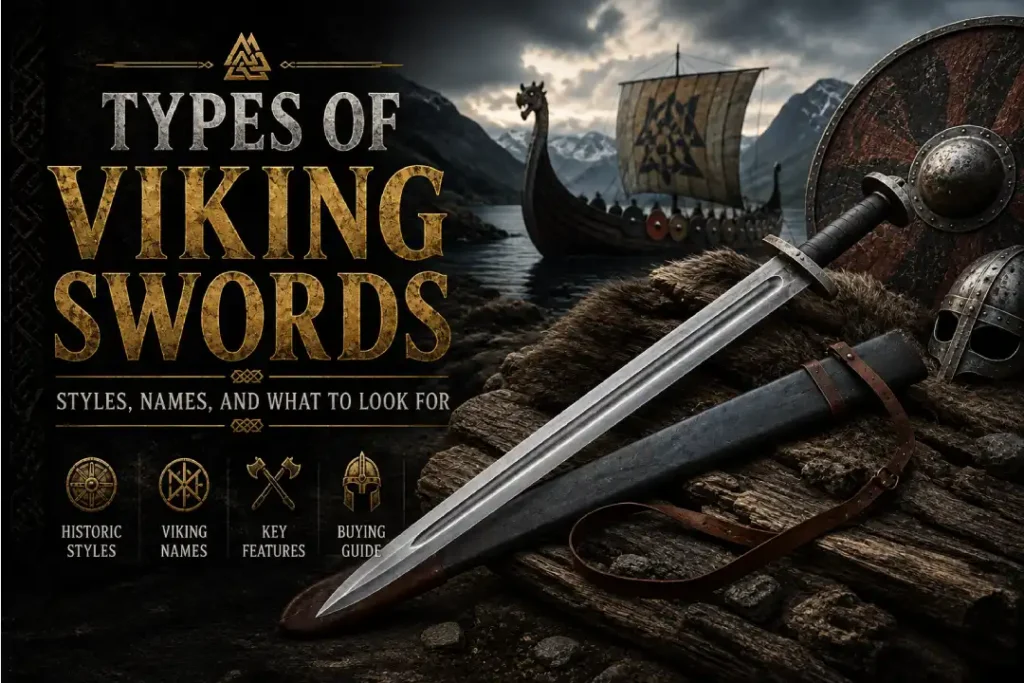
Viking swords weren’t all the same weapon with different decorations slapped on. Over roughly 400 years, sword-making across Scandinavia moved through several distinct styles, and historians can date a sword almost entirely by looking at its hilt.
This guide covers the real types of Viking swords, what the famous names like Ulfberht actually mean, and what separates a well-made modern Viking sword from a weak one.
What Actually Makes a Sword “Viking”
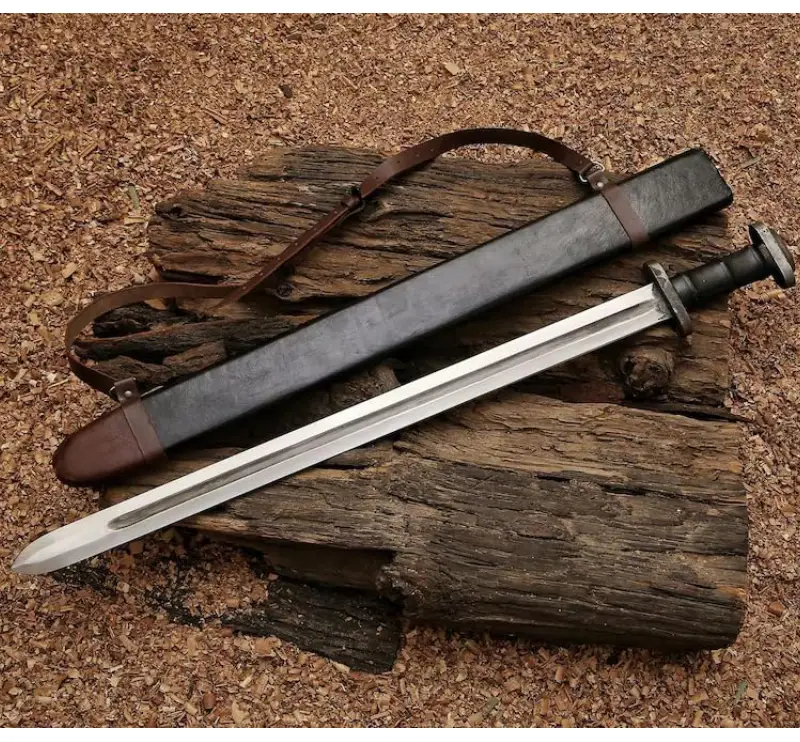
A Viking sword is a one-handed, double-edged blade made and used across the Norse world between roughly 700 and 1100 CE. The blade usually ran 28 to 32 inches, with a full sword closer to 30 to 35 inches once you include the hilt. That length wasn’t random. It matched a fighting style built around a shield in the other hand, where a shorter blade gave better control than the long two-handed swords that came later in medieval Europe.
The blade itself changed very little across those 400 years. What changed constantly was the hilt. The pommel shape, the guard, and the decoration are what actually separate one type from another, and they’re also what tell historians roughly when and where a sword was made.
The Main Types of Viking Swords
The standard reference for Viking sword types comes from Jan Petersen, a Norwegian archaeologist who sorted thousands of sword finds into categories back in 1919. His system uses letters, runs to about 26 types, and is still what museums and researchers use today. You don’t need all 26 to understand how the types actually differ. The table below covers the major groups.
| Type | Time Period | Hilt Style | Where You’ll See It |
| Petersen B/C | 700s–800s | Simple lobed pommel | Early Viking graves |
| Petersen H | 800s–900s | Plain, functional guard | Most common find overall |
| Petersen K/S | 800s–900s | Silver or bronze inlay | High-status graves |
| Petersen Z/Y | 900s–1000s | Longer, thinner guard | Late Viking Age, transitional |
A pattern worth noticing: swords get more decorated as the Viking Age goes on. Early types are plain and functional. By the 800s and 900s, wealthier owners were commissioning hilts with silver wire and bronze fittings, which is exactly why grave finds with ornate hilts are usually read as belonging to higher-status Vikings.
Viking Sword Names: Maker’s Marks vs. Legendary Blades
Two very different things get called “Viking sword names,” and mixing them up is where most confusion starts.
Ulfberht and Ingelrii are maker’s marks. They were forged directly into the blade, usually as an inlaid inscription reading +VLFBERHT+ or similar. Metallurgical testing on surviving Ulfberht blades has shown they were made from unusually pure, high-carbon crucible steel, a material that wasn’t common in Europe at the time. Historians think Ulfberht functioned closer to a brand than a person’s name, since blades bearing it span roughly 200 years and were likely made by more than one workshop.
Skofnung, Tyrfing, and Legbiter are legendary blades. These come from Norse sagas, not archaeology. Skofnung was said to belong to a legendary Danish king. Tyrfing was a cursed sword from the Poetic Edda. Legbiter was carried by the real historical king Magnus III of Norway, though the sword itself survives only in written accounts. If you’re researching for accuracy, it’s worth keeping these separate from the archaeological finds, since they’re literary weapons rather than physical ones we can examine today.
How Historians Tell the Types Apart
If you’re looking at a sword and trying to place it, the hilt tells you almost everything. Pommel shape is the first clue: a simple rounded or lobed pommel points toward an earlier type, while a more angular or multi-lobed pommel usually points later. Guard thickness is the second clue, since early guards tend to be short and thick, and later ones stretch longer and thinner as the design moves toward the medieval arming sword. Decoration is the third clue. Plain iron suggests an earlier or lower-status sword, while silver inlay, twisted wire, or bronze fittings suggest a later or higher-status one.
The blade is the least useful clue of the three. Most Viking swords used a similar double-edged, fullered blade for centuries, which is exactly why Petersen built his entire system around the hilt instead of the blade.
Materials and Construction
Original Viking swords were made from a mix of techniques depending on the period and the smith’s skill. Earlier blades sometimes used pattern-welding, where strips of iron and steel with different carbon content were twisted and forged together, creating a rippled surface pattern and improving the blade’s flexibility. Later blades, including the Ulfberht group, moved toward higher-quality single-piece steel as crucible steel became available through trade routes reaching into Central Asia.
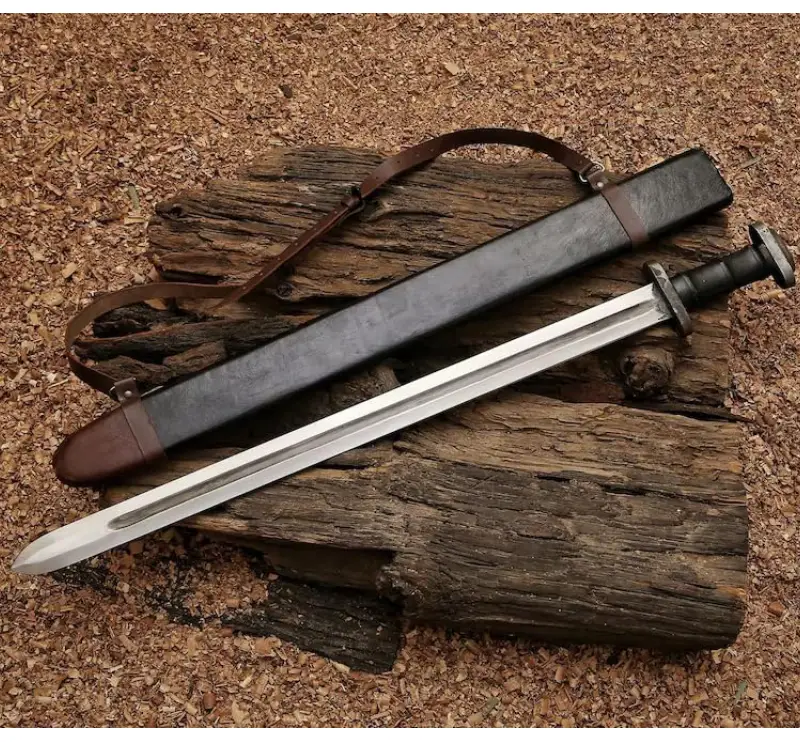
Modern hand-forged reproductions follow similar logic, even if the exact historical techniques vary by maker. A quality Viking sword today should use a proper spring steel, like 5160, that’s been through-hardened and tempered rather than just surface-hardened. It should also be full tang, meaning the same piece of steel that forms the blade runs the entire length of the handle. A partial or rat-tail tang, where a thin rod is welded or glued into a separate handle, is a common shortcut on cheap replicas and a common point of failure under real use.
Buying a Hand-Forged Viking Sword
If you’re buying rather than just researching, match the type to what you actually want. A Type H-style sword, with its plain and functional hilt, gives you the most historically common look and works well if you want something closer to what an average Viking actually carried. A Type K or S-style sword, with an inlaid hilt, suits a display piece or a gift where visual detail matters more than field handling.
Check three things before buying: tang construction, steel type, and balance. Full tang and a named steel type (5160 is a reliable, well-tested choice) should be stated clearly by the seller, not left vague. Balance matters more than most buyers realize. Pick the sword up if you can, or check the stated point of balance if buying online. A well-balanced Viking sword feels lighter than its weight suggests because the balance point sits close to the guard rather than far out toward the tip.
At Gladius Forging, our Viking swords are hand-forged from 5160 steel, full tang, and shipped with a fitted scabbard, built to be handled and used rather than just displayed.
Mistakes to Avoid
The most common mistake is buying based on looks alone. A heavily decorated hilt photographs well but tells you nothing about how the sword performs, and some of the most decorated replicas on the market are also the weakest, since money went into finish rather than steel or tang construction.
The second common mistake is ignoring tang construction entirely. Sellers don’t always volunteer whether a sword is full tang or rat-tail tang, so it’s worth asking directly if the listing doesn’t say. A rat-tail tang can look identical to a full tang sword from the outside and fail completely under the kind of stress a full tang would handle without issue.
The third mistake is assuming all steel is the same. “Stainless steel” sounds durable, but many stainless blades are actually softer and more brittle than a properly tempered carbon or spring steel like 5160. Ask what steel is used and whether it’s through-hardened, not just what the listing calls it.
Caring for a Viking Sword
Carbon and spring steel blades need a light coat of oil after handling to prevent rust, since bare skin leaves moisture and salt on the metal. A simple mineral oil or dedicated blade oil works fine. Wipe the blade dry before storing it, and avoid leaving it in a leather sheath long-term, since leather can trap moisture against the steel. A wooden display stand or a breathable wrap is a better long-term storage choice than a tight scabbard.
FAQ’S
What is the difference between Petersen sword types?
Petersen types differ mainly in the hilt, not the blade. Earlier types like B and C have simple lobed pommels, while later types like K and S add silver or bronze inlay, and the latest types (Z and Y) shift toward the longer, thinner guards of the medieval period.
Is Ulfberht a sword name or a maker’s mark?
Ulfberht is a maker’s mark, not the name of an individual sword. It was forged into the blade itself and appears on multiple swords made from unusually pure, high-carbon steel, likely produced by more than one workshop over roughly 200 years.
How do I know if a modern Viking sword replica is well made?
Check the tang first. A full tang, where the steel runs the entire length of the handle, is far stronger than a rat-tail tang welded or glued into the grip. Also check the balance point, which should sit a few inches in front of the guard rather than far out toward the tip.