Enjoy free worldwide shipping on all our handcrafted blades!
What Is a Bowie Knife? Uses, History, and Buying Guide (2026)


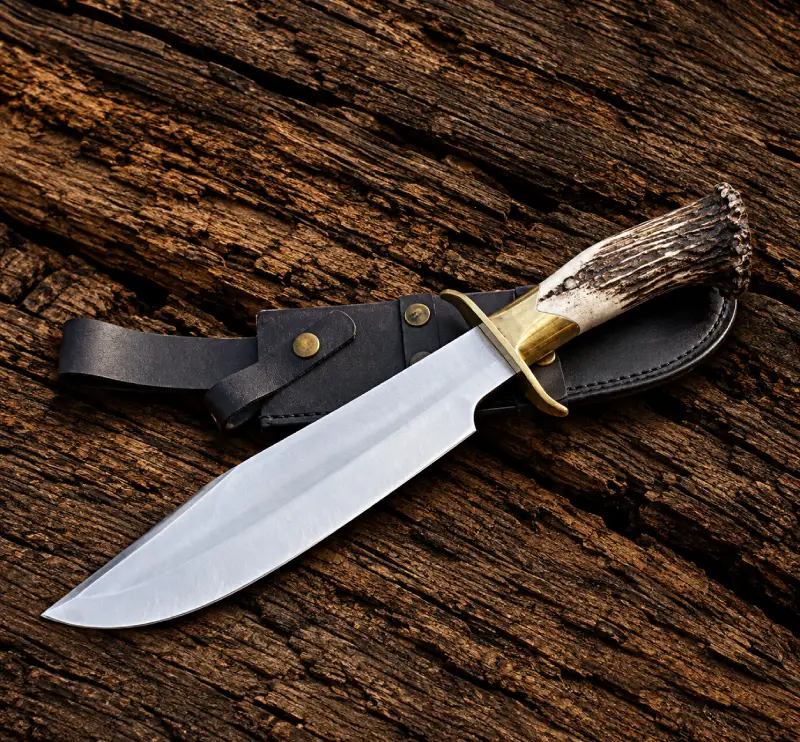
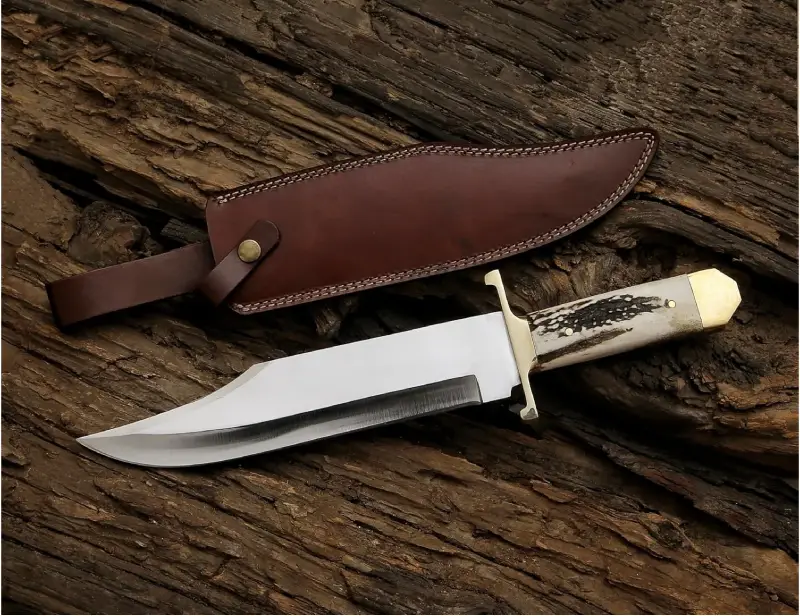
Wondering what is a bowie knife? A Bowie knife is a large fixed-blade knife known for its long, curved clip-point blade and thick, strong spine.
It was built to handle heavy outdoor work, and a well-made one still does that job better than most knives on the market today.
If you’ve ever wondered what is a Bowie knife used for, or why hunters, campers, and collectors keep buying them, this guide covers it all, including what separates a factory-stamped blade from a hand-forged one like the ones we make at Gladius Forging.
What Is a Bowie Knife, Exactly?
A Bowie knife is defined by a few specific features, not just its size. Most Bowie knives have a blade between 8 and 12 inches long, though smaller versions exist for everyday carry.
The blade shape is the real identifier. A true Bowie knife has a clip-point tip, where the top third of the blade “clips” down to a sharp point. Many versions also have a false edge on that clipped section, which is sharpened but doesn’t run the full length of the spine. This design gives the knife a strong piercing point without weakening the blade.
Other common features include:
- A full tang, meaning the blade steel runs the entire length of the handle for strength and balance.
- A guard, which is a small crossbar between the blade and handle that stops your hand from sliding forward onto the edge.
- A thick spine, usually 3/16 inch or thicker, which lets the knife handle chopping and prying without bending or snapping.
These features together make a Bowie knife tougher than a typical hunting or kitchen knife, and more precise than a machete.
Handmade vs. Factory-Made Bowie Knives
Most Bowie knives sold today are stamped or laser-cut from sheet steel, heat-treated in a factory batch, and finished with molded synthetic handles. That process is fast and cheap, but it treats every blade the same, whether the steel is graded well or not.
A hand-forged Bowie knife is different. The blade starts as a bar of steel that a smith heats and hammers into shape, which packs the grain structure tighter along the edge. That extra step takes hours instead of minutes, but it produces a blade with better edge stability and a distinct temper line you can actually see.
Handle materials tell the same story. Factory knives lean on G10 or rubber composites because they’re cheap to mold. Handmade Bowie knives often use natural materials instead, like stag antler, bone, horn, or hardwood, each piece shaped by hand so no two knives look exactly alike. At Gladius Forging, our Bowie knives collection is built this way, with high carbon and Damascus steel blades paired with natural stag and wood handles, and each knife ships with a genuine leather sheath.
A Real History of Bowie Knife
The Bowie knife gets its name from Jim Bowie, an American frontiersman who became famous for using one in an 1827 duel known as the Sandbar Fight. The knife itself is usually credited to his brother, Rezin Bowie, who is believed to have designed the original blade shape. After the fight, blacksmiths across the country started making their own versions, adding the clip point and guard as the design spread.
By the mid-1800s, the Bowie knife had become a standard tool for settlers, soldiers, and hunters moving west. It wasn’t just a weapon. It was one of the few tools a person needed to skin game, clear brush, and defend themselves in the same day. That versatility is why the design has survived, almost unchanged, for nearly 200 years.
What Is a Bowie Knife Used For?
A Bowie knife earns its reputation because it can do the job of several tools at once. Here’s how people actually use one today.
Hunting and field dressing. The clip point and sharp edge make it easy to skin and gut game cleanly. The strong spine can handle tougher jobs, like splitting a rib cage, that a thinner hunting knife would struggle with.
Camping and bushcraft. A Bowie knife can baton through wood to make kindling, carve tent stakes, and prep food, all with one tool. Its weight and blade length give it enough chopping power to replace a small hatchet on a lightweight trip.
Survival situations. When you only have one knife, you need it to do everything. A Bowie knife can build a shelter, cut cordage, process firewood, and serve as a last-resort defense tool if needed.
Everyday and utility work. On a farm or ranch, a Bowie knife cuts through twine, opens feed bags, and clears light brush. Around the house, it handles heavy-duty jobs like breaking down boxes that a smaller pocketknife can’t manage.
Self-defense. The length and point give a real reach and stopping advantage. Like any defensive tool, it only helps if you’re trained to use it and you carry it legally.
Collecting. Because of its history, a well-made Bowie knife is also a piece people display and pass down. Collectors often look for full-tang construction and hand-forged blades, like Damascus steel, since those knives hold their value, keep their edge for decades, and carry more character than a mass-produced version.
Bowie Knife vs. Other Knife Types
- A hunting knife is usually shorter and lighter, built mainly for skinning. A Bowie knife handles that too, plus chopping and heavier cutting a dedicated hunting knife isn’t designed for.
- A survival knife overlaps in purpose but is sometimes built lighter for carrying long distances, trading some chopping power for weight savings.
- A machete is longer and thinner, faster at clearing brush, but far less precise for detail work like skinning or carving, where a Bowie knife holds the advantage.
Choosing the Right Bowie Knife
The right size and steel depend on what you’re using it for.
Blade length. For hunting, camping, and survival, an 8 to 12 inch blade gives you the best mix of chopping power and control. For everyday carry, a shorter 7 to 10 inch blade is easier to manage and still handles most daily tasks.
Steel type. High carbon steel is a traditional choice for forged Bowie knives because it sharpens easily and holds a strong edge under heavy use, though it needs regular oiling to prevent rust. Damascus steel takes that further, made by folding and forge-welding multiple layers of steel together. This produces a blade with visible wave patterns along the surface, along with excellent edge retention and strength from the layered structure.
Tang construction. A full-tang knife, where the blade metal runs through the entire handle, is stronger than a partial-tang design. For any heavy-use knife, full tang is worth the extra cost.
Handle material. Natural handle materials like stag antler, bone, horn, and hardwood offer a secure grip and age well over years of use, and each one has its own grain or texture, so no two handles look identical. A genuine leather sheath, rather than molded plastic, also protects the edge better over time and develops its own character with use.
Why Choose a Bowie Knife from Gladius Forging?
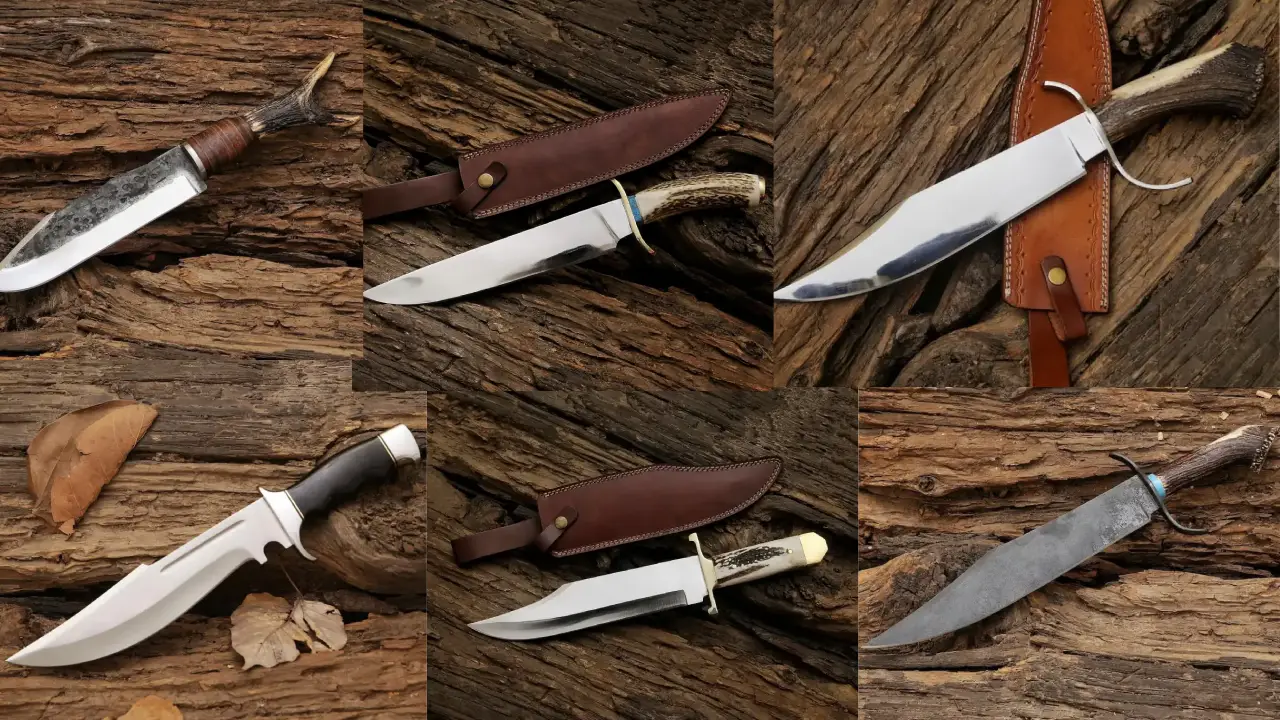
A Bowie knife from Gladius Forging is made for people who appreciate real craftsmanship. Each knife is carefully shaped, finished, and assembled by hand, giving every piece its own character. We focus on practical blade designs, comfortable handles, strong construction, and clean finishing rather than mass production.
Customers can also request custom details such as blade style, handle material, finish, and sheath design. Whether you want a Bowie knife for your collection, outdoor use, or as a custom-made piece, Gladius Forging gives you the option to own a knife made specifically to your preferences.
Bowie Knife Laws: What to Know
Bowie knives are legal to own in most of the United States, but carry laws vary by state and city. Some places restrict blade length for concealed carry, while open carry is allowed in many states. A few states and cities still have restrictions on Bowie knives by name, dating back to old laws from the 1800s. Always check your specific state and local regulations before carrying one in public; this article isn’t legal advice, just a starting point for your own research.
How to Maintain a Bowie Knife
A Bowie knife holds up for decades if you take care of it. After each use, wipe the blade clean and dry it fully before storing it, since trapped moisture causes rust, especially on high carbon and Damascus steel blades that aren’t stainless.
When sharpening, aim for a consistent angle, typically around 20 degrees per side for a Bowie knife’s thick edge. A sharpening stone or guided system works best. Finish with a strop to polish the edge and remove any burr.
Store the knife in a dry sheath, away from extreme heat or humidity. A light coat of oil on the blade adds extra rust protection, especially if you live somewhere humid or won’t use the knife for a while.
Common Mistakes to Avoid
Many first-time owners make the same few errors. Buying a partial-tang knife for heavy use is one of the most common, since these are more likely to loosen or break under stress. Skipping regular cleaning is another, especially with carbon steel blades that rust quickly if left wet. Using the wrong sharpening angle also causes problems: too shallow creates a fragile edge that chips easily, and too steep cuts inefficiently. Sticking close to 20 degrees per side keeps the edge both sharp and durable.